
Copper, Brass, or Aluminum? A Practical Scrap Sorting Guide
A quick look at color can help, but it won’t settle every scrap-yard mystery. Here are the checks I use to tell copper, brass, and aluminum apart before I sort a pile.
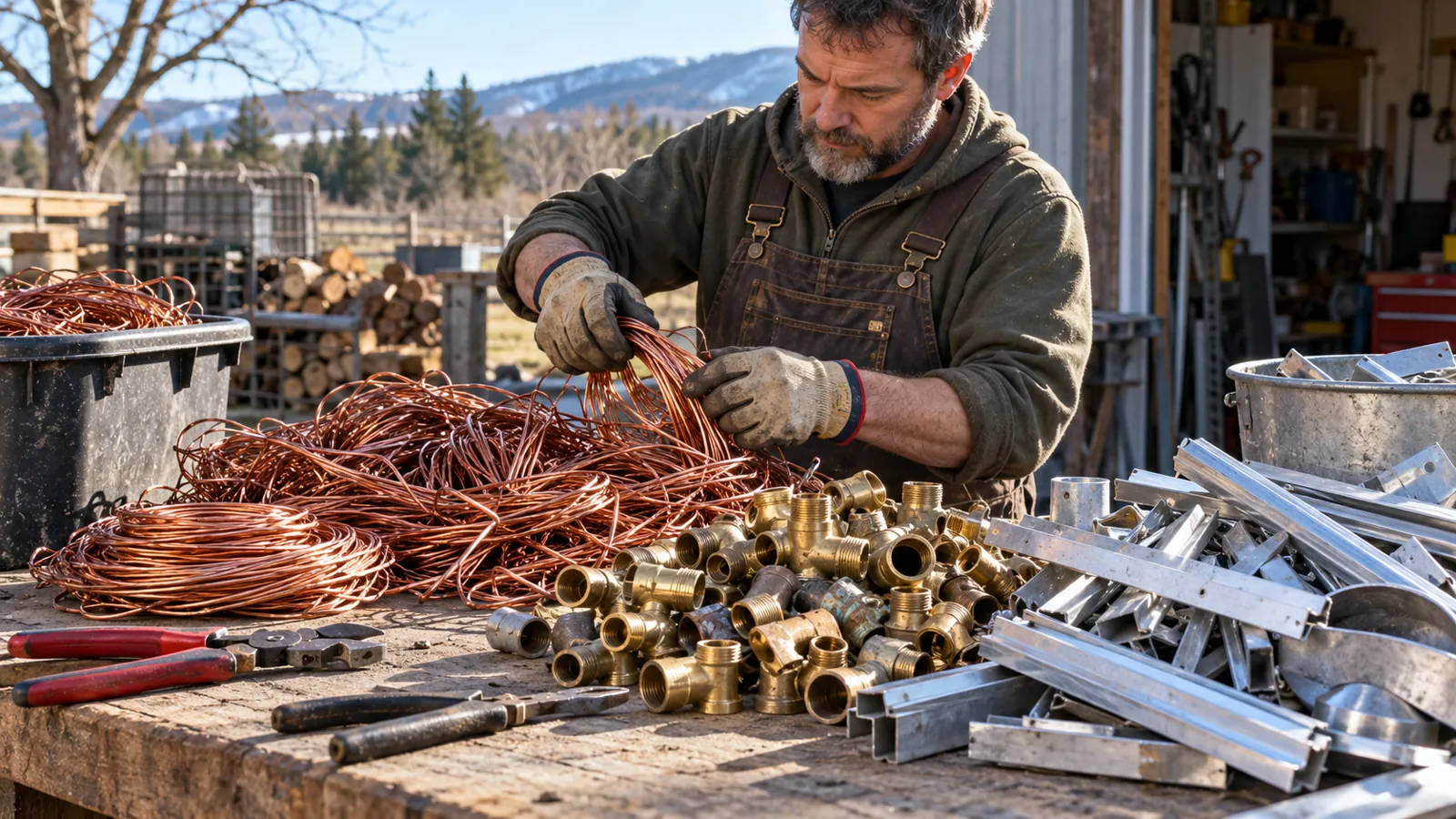
I used to think sorting scrap metal was mostly a matter of looking at a piece and having a confident opinion. That confidence lasted until I put a brass fitting in the copper pile and my friend asked why I was saving a very expensive-looking piece of yellow metal as red metal. The answer was that I had not looked very closely.
If you want to know how to identify scrap metal, start with the basics: color, weight, surface, and what the object was used for. None of those clues is perfect on its own. A little patience usually beats guessing, especially if you plan on selling scrap metal by weight and want your piles to be sorted properly.
Start with a clean look
Before you identify anything, make sure you can see the material. Dirt, paint, oil, plastic coatings, and oxidation can hide the surface. Brush off loose grime and wipe a small area with a rag. Don’t grind or cut unknown scrap just to expose a shiny patch; coatings and residues may be hazardous, and some pieces can contain materials you would rather not breathe or touch.
Then look at an unpainted edge or a scratch on a safe, expendable spot. Copper usually shows a reddish or salmon color. Brass tends toward yellow or golden tones. Aluminum is often silvery, though it can look dull grey after weathering. Plating can fool the eye: a thin copper-colored finish may cover steel, and brass-colored plating can cover something else entirely.
Copper, brass, and aluminum at a glance
| Metal | Common visual clue | Typical items | What can mislead you |
|---|---|---|---|
| Copper | Reddish brown when clean; often green or dark when weathered | Pipe, wire, some plumbing parts | Paint, varnish, plating, or heavy oxidation |
| Brass | Yellow to gold colored | Valves, fittings, decorative hardware | Gold-colored plating and mixed alloys |
| Aluminum | Light silver-grey, usually noticeably light in the hand | Frames, cookware, some wire and cast parts | Coatings, dirt, or pieces mixed with steel fasteners |
These are useful starting points, not a laboratory test. Alloys vary, and old objects are rarely labeled with a helpful note saying “mostly aluminum, please.”
How to tell brass from copper
Color is the first clue when you’re asking how to tell brass from copper. Clean copper has a pinkish-red cast; brass is more yellow. On a worn or dirty object, check an exposed edge, a file mark already present, or a small inconspicuous spot using a hand file if it is safe and permitted. Don’t do this on an object that might be valuable, historic, or someone else’s property.
Weight can help, but not by feel alone. Copper and brass are both fairly dense, so a small brass fitting can feel surprisingly substantial. Shape and use offer hints: plumbing valves and decorative knobs are often brass, while electrical wire and many water pipes are commonly copper. “Often” is doing real work in that sentence. Manufacturers use different materials, and parts may combine several metals.
A magnet is useful mainly for ruling out some steel. Copper, brass, and aluminum are not attracted to an ordinary magnet, but a steel screw inside a brass fitting may be. That does not mean the entire object is steel. Check the main body and attached pieces separately when possible.
Aluminum is light, but check the whole object
Aluminum is usually much lighter than copper or brass for an object of similar size. A clean aluminum part also has a pale silver surface, but coatings and corrosion can make it look chalky or dark. If two pieces are about the same size, the difference in weight can be obvious. If they are different shapes, it is less useful.
Many items are assemblies rather than single-metal objects. A window frame may have steel screws, plastic seals, and aluminum rails. A cooking pot could have a different metal base or handle. Separate what you reasonably can, and keep mixed pieces in a separate container until you know how your local yard wants them handled.
Sort carefully before selling
Scrap yards set their own grades and acceptance rules. Call ahead or check the yard’s current information to ask how it handles insulated wire, mixed brass, painted metal, small appliances, and attached fittings. A yard may classify material differently from another yard nearby. Don’t assume a piece will be paid at the grade you had in mind.
Keep copper, brass, aluminum, steel, and mixed or uncertain items in separate, clearly marked containers. Remove nonmetal attachments only when doing so is safe and allowed. Never burn wire to remove insulation: burning coatings can release harmful fumes, and the material may be rejected anyway. Use ordinary hand tools only for work you can do safely, and avoid cutting sealed tanks, pressurized items, batteries, or unknown containers.
If you are sorting a larger amount, ask about identification requirements, accepted loads, and how weighing works before you make the trip. Selling scrap metal by weight means the scale matters, but the yard’s grade and contamination rules matter too. A bucket of clean, correctly sorted material is easier to assess than a mysterious heap with rubber, wood, and screws mixed through it.
Finds from detecting and the scrap pile
Metal detecting can turn up modern rubbish along with the occasional useful metal object. I’ve brought home enough bent wire to build a very small fence for a very small, deeply unimpressed garden. If a find is clearly rubbish and you can remove it safely, dispose of it properly. If it may be historically important, hazardous, or part of a protected site, leave it in place when appropriate and follow local guidance.
For a lighthearted way to sort virtual finds, MetalHunter lets you decide what belongs in a collection and what goes to the scrap yard. In real life, the first job is still figuring out what you have and whether it is safe to handle.
FAQ
Can a magnet tell copper, brass, and aluminum apart?
A magnet can help identify ferrous steel or iron, but it generally will not separate copper, brass, and aluminum from one another. Their appearance, weight, and object type provide additional clues.
Is yellow metal always brass?
No. It may be plated steel, another alloy, or a coated surface. Check an exposed area and use more than one clue before sorting it as brass.
Should I strip insulation from scrap wire?
Ask your local yard about its rules and grades. Never burn insulation; fumes can be harmful. Only strip wire with suitable tools if you can do so safely.
Can I sell mixed scrap metal by weight?
Some yards accept mixed loads, but they may grade them differently or require sorting. Contact the yard first to learn what it accepts and how it classifies the material.


