
Metal Detecting Laws and Permission: Check Before You Dig
A friendly landowner can make a detecting day; a forgotten permission check can end it before the first signal. Here’s how I check the rules and the ground before I dig.
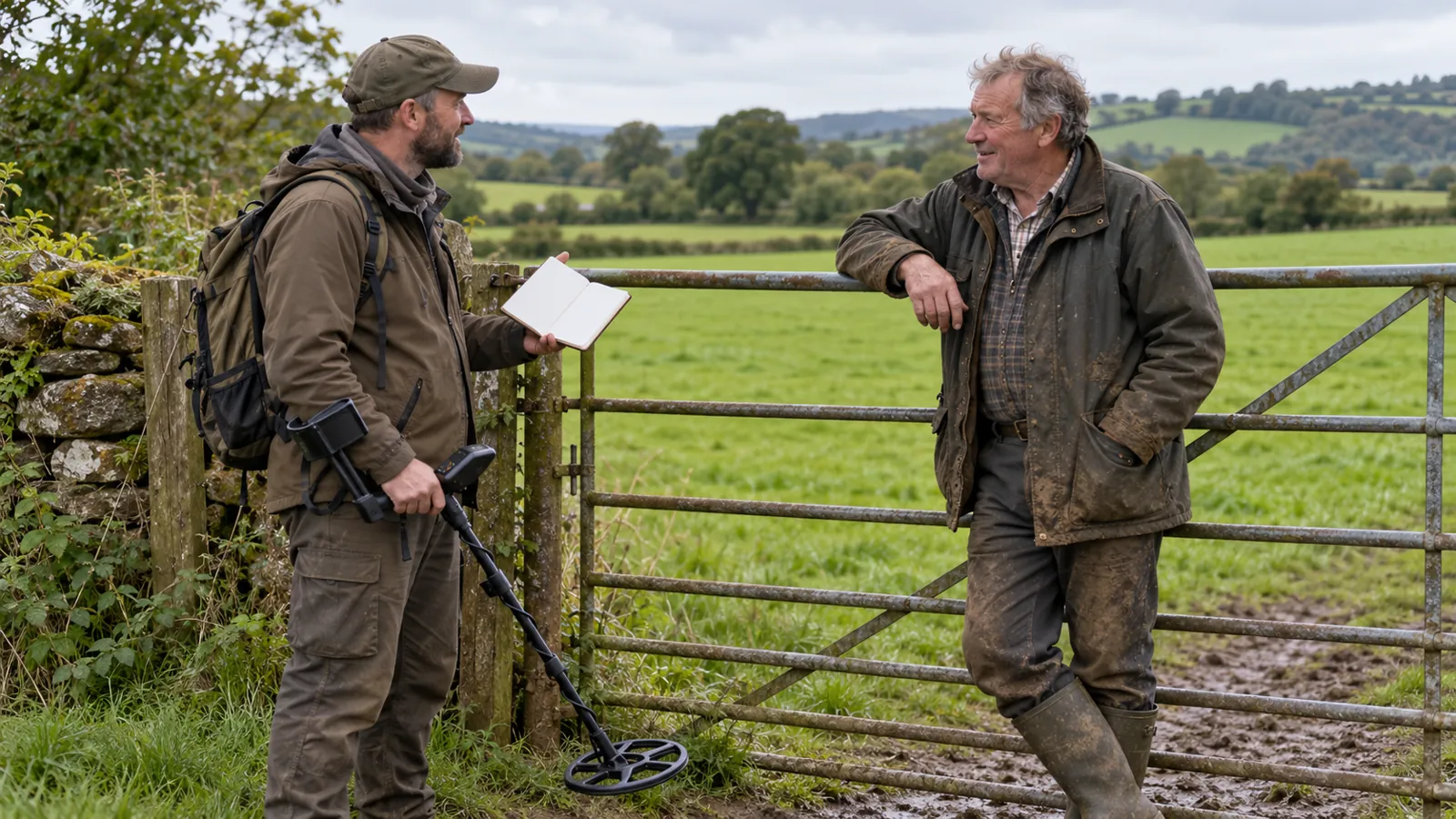
The first time I asked a landowner if I could detect on a field, I had rehearsed a whole speech in the car. Then I got out, said hello, explained the hobby, and discovered that a polite question is not nearly as complicated as the imaginary conversation you have with yourself. The answer was no, which was disappointing but useful: I had learned that permission has to come before the detector comes out.
Metal detecting laws vary by country, state, province and even by the kind of land you’re standing on. The safest habit is to treat permission and legal status as separate checks. A person may be happy for you to search their field, but that does not automatically override heritage protections or other rules. Likewise, land that looks public may have rules against digging or removing objects.
Start with the land, not the signal
Before I plan a search, I work out who manages the place and what kind of land it is. Private land usually means asking the owner or whoever has authority to grant access. A casual “the farmer said it was fine” can be too vague if the field is rented, shared, or subject to a separate agreement. I try to get the arrangement in writing, even if it is just a clear message that says where I may go, when, and what I should do with anything I find.
Ask about the practical details too. Can you park near the gate? Are livestock present? Are there crops, drainage works, buried services, or areas that must be avoided? What should happen if you find something that might be historically important? These questions can feel overly formal, but they save awkward calls later. I once assumed a quiet corner of a field was fair game and only then noticed the new crop rows. The detector stayed in the car.
Can you metal detect on public land?
Sometimes, but “public land” does not mean “free to dig.” Parks, beaches, forests and recreation areas can be managed by different authorities, each with its own rules. Some allow detecting in limited areas or at certain times; others prohibit it, require a permit, or allow searching only without disturbing the ground. A public right of access may cover walking without covering excavation or taking objects away.
Check the specific manager’s current guidance before you go. Look for rules about digging, tools, removing finds, group activity and seasonal closures. If the page is unclear, contact the authority and ask about the exact location and activity. “Can I use a detector?” and “Can I dig small plugs and keep what I find?” are different questions.
How the rules differ across countries
For metal detecting rules UK US Canada Australia, there is no single answer that covers every site. The broad principles below are a starting point, not legal advice. Rules change and local protections matter, so confirm the current requirements with the relevant land manager or heritage authority.
United Kingdom
On private land, get the landowner’s permission and agree what happens to finds. Scheduled monuments and other protected archaeological places have special restrictions; do not assume ordinary permission is enough to search them. If a find may qualify as treasure under the Treasure Act in England, Wales and Northern Ireland, there are reporting requirements and a deadline. Scotland has a different legal framework and reporting process for archaeological finds. If an object looks unusually old, valuable, or like part of a group, pause and ask the local Finds Liaison Officer or relevant authority what to do. Don’t scrub it clean to make it easier to identify.
United States
On private property, obtain permission from the owner and check whether local or state rules also apply. Federal land is not one uniform category: national parks and other protected federal areas can prohibit removing archaeological resources, and the Archaeological Resources Protection Act (ARPA) applies to archaeological resources on certain public and Native American lands. State parks, forests and local parks have their own rules; some permit detecting in designated areas while others do not. When in doubt, ask the agency that manages the exact parcel, rather than relying on a forum post about a different park.
Canada
Provincial and territorial heritage laws vary, and municipal land managers may set additional conditions. Historic sites, archaeological sites and protected lands can have strict restrictions on searching or collecting. Permission from a private owner does not necessarily make it lawful to remove archaeological objects. Check the provincial or territorial heritage authority and the land manager before detecting. If you turn up an item that may be an artifact, leave it in place if safe, note the location, and seek advice.
Australia
Rules are set across states and territories, with separate requirements for parks, reserves, Aboriginal heritage places and other protected areas. A permit may be needed in some places, and detecting may be prohibited in others. Permission from a landholder is not a substitute for checking heritage protections or public-land rules. Contact the relevant state or territory agency and ask specifically about detecting, digging, and taking finds from your intended location.
Make permission clear and easy to keep
When I ask for access, I explain that I’m a hobby detectorist, describe the small tools I use, and say that I will fill every hole and carry out rubbish. I ask where I may search and whether there are areas to avoid. I also agree how finds will be handled rather than assuming that a coin or buckle automatically belongs to me. Some owners want everything returned; others may be comfortable with an agreed arrangement. A clear conversation prevents a disagreement after a good signal.
Keep a copy of the permission and any permits with you. If the owner’s instructions change, follow the new instructions. Permission is for the agreed place and activity, not a lifetime pass for every neighbouring field. Respect locked gates and posted signs, and don’t use another detectorist’s access as evidence that you can go too.
Pause when a find seems archaeological
A single old-looking object may be hard to judge in the field, especially when it is muddy or corroded. What matters can include its context and nearby finds, not just the metal or apparent age. If you find something that seems significant, stop digging around it, note where it came from, and contact the appropriate local authority or finds service. Avoid washing, polishing or separating objects that may belong together. A phone photo and a location note are more useful than a heroic scrub with a pocket knife.
A quick check before heading out
- Identify the owner or land manager for the exact spot.
- Confirm that detecting, digging and removing finds are all allowed there.
- Check for protected sites, seasonal restrictions and permit requirements.
- Agree access, parking, boundaries and how finds will be handled.
- Take permission details with you and leave the place tidy.
Once I made these checks part of the hobby, planning became less stressful. I spend less time wondering whether I’m in the wrong place and more time paying attention to the ground. If you enjoy the searching part but don’t have a permitted site lined up, MetalHunter offers a virtual version of the routine, with different locations and signals to investigate.
FAQ
Do I need written permission to metal detect on private land?
Requirements vary, but written permission is a sensible way to record what you agreed. Include the location, allowed activity, dates or access conditions, and how finds will be treated. Also check whether heritage or local rules apply.
Can you metal detect on public land?
Sometimes. Public access does not necessarily allow digging or taking objects. Check the rules for the specific park, beach, forest or other site with the authority that manages it.
What should I do if I find something that may be treasure or an artifact?
Leave it as undisturbed as you safely can, record the location, and contact the relevant local finds service or heritage authority. Reporting rules differ by jurisdiction, so get advice promptly.
Is a landowner’s permission enough on a protected site?
Not necessarily. Protected archaeological places can have additional restrictions that private permission cannot override. Check the applicable heritage rules and contact the responsible authority before searching.


