
Do I Need a Pinpointer? How a Probe Saves Time on Every Target
I spent my first season detecting without a handheld probe, sifting dirt through my gloves until my knees gave out. A pinpointer cut target recovery from five minutes to thirty seconds.
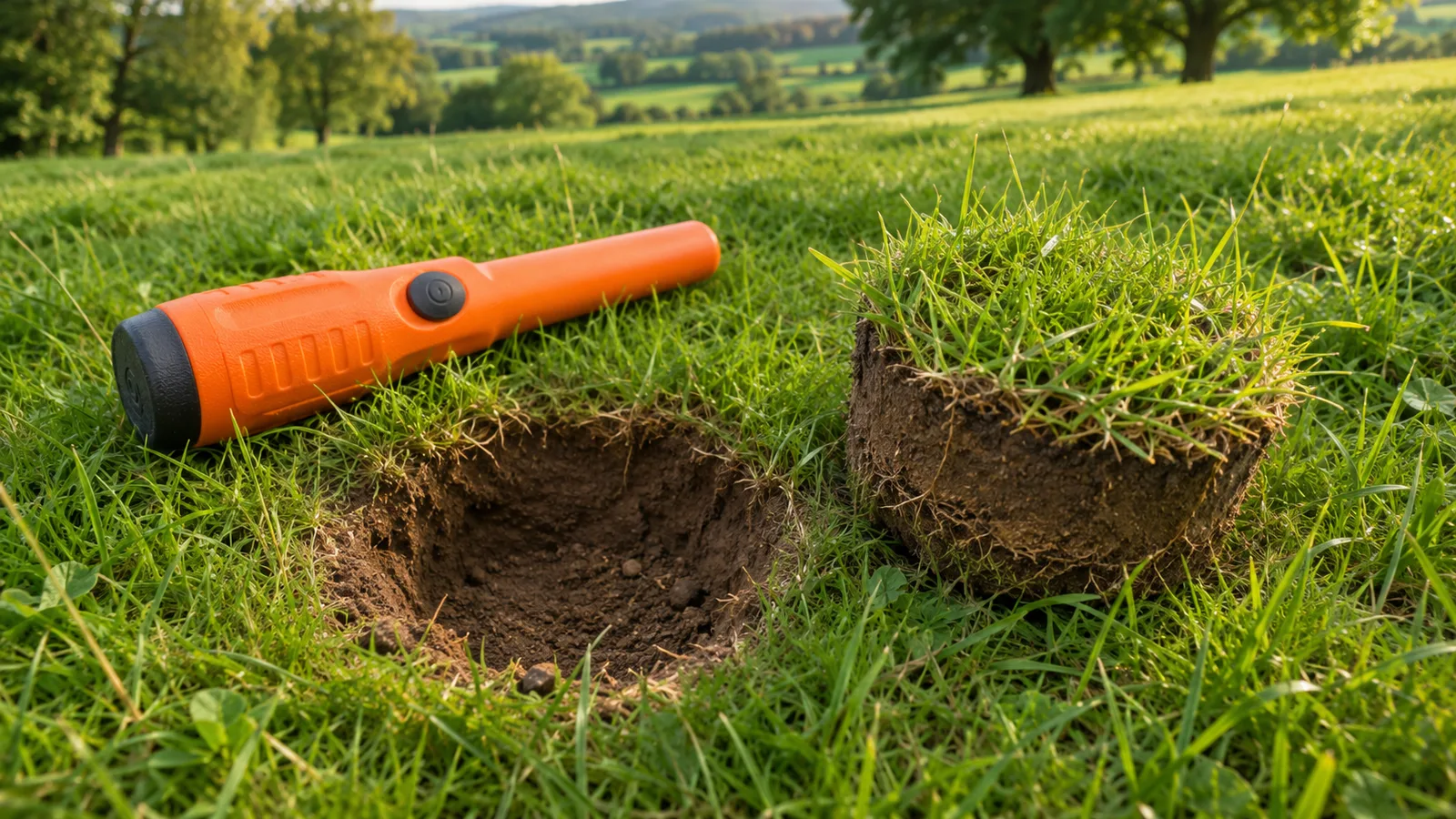
During my first two months in this hobby, I was convinced that handheld electronic probes were an unnecessary luxury designed to separate newcomers from their spare cash. My detector had a built-in pinpoint button on the handle, so why would I spend extra money on a small plastic wand? Then came an afternoon in late November when I dug a neat plug in damp farm soil, got down on my knees, and spent fifteen miserable minutes crumbling wet clods of clay by hand. The target turned out to be a tiny brass rivet coated in grey mud. When beginners ask me do I need a pinpointer, I think back to that muddy afternoon and answer with an emphatic yes.
A metal detector coil gives you a general zone on the ground, but once your spade cuts the turf, finding a thin coin or a tiny button hidden inside muddy roots is an entirely different battle. A handheld pinpointer turns a frustrating treasure hunt inside a dark hole into a quick thirty-second recovery.
What a Handheld Pinpointer Actually Does
A handheld probe is essentially a miniaturized metal detector built into a rugged, cylindrical stick. While your primary search coil sweeps a circle ten or twelve inches wide, a pinpointer generates a concentrated electromagnetic field along its narrow shaft and tip. Its detection range is short, typically between one and three inches, which is precisely why it is so effective.
Instead of guessing whether the target is stuck in the sidewall of the hole, hiding in the bottom pit, or clinging to the underside of the grass plug, you slide the probe inside. As the tip approaches the metal, the probe buzzes and vibrates, pulsing faster and louder the closer you get. You pinpoint the exact clod within seconds, pick out the find, and fill your hole without making a sprawling mess.
How to Use a Pinpointer in the Dirt
Learning how to use a pinpointer efficiently takes only a couple of outings, but having a consistent routine prevents wasted time and damaged finds. Here is the recovery sequence that has served me well across hundreds of holes:
- Cut your plug on three sides, fold it back gently like a hinge, and scan the open hole with your detector coil first to confirm the target is still down in the dirt or came up with the plug.
- Switch on your pinpointer away from the soil so it calibrates to clean air without false ground signals.
- Probe the flap of turf first. Run the length of the probe across the roots and underside soil. If it buzzes, gently pull apart the grass roots right at the probe tip.
- If the plug is clean, lower the probe into the hole. Sweep around the sidewalls first before probing the bottom floor. Many targets sit near the upper edge rather than deep down.
- When the audio reaches a continuous high buzz, stop digging with your metal spade. Use a plastic probe tip or your gloved fingertips to tease the find loose.
One essential technique every detectorist should master is detuning. If you are hunting in mineralized dirt or near a large metal item that causes the probe to beep loudly across a wide zone, touch the probe tip to the ground right where it starts buzzing and press the power button once. This recalibrates the sensitivity threshold, shrinking the detection zone down to an inch and revealing the exact center of the target.
Finding the Best Pinpointer for Metal Detecting
When searching for the best pinpointer for metal detecting, avoid twenty-dollar unbranded novelty wands found on bargain websites. Cheap probes suffer from terrible frequency drift, meaning they start screaming whenever temperature shifts or when you press the tip against damp soil. A proper probe needs to survive hard abuse in gravel, rain, and mud.
Look for full waterproofing rather than simple weather resistance. Even if you do not hunt underwater, being able to wash your muddy pinpointer under a garden tap or swish it clean in a creek makes maintenance effortless. Most reputable brands offer ratings down to ten or twenty feet of water immersion.
Vibration and audio combinations are another vital feature. When hunting along noisy roads, beside windy ocean surf, or while wearing thick winter beanies, audio beeps are easy to miss. A strong haptic pulse in your palm ensures you never miss a hit. A bright housing color, like high-visibility orange or neon green, is equally valuable. Set a black probe down in autumn leaves, and you will spend the next hour hunting for your pointer instead of coins.
| Feature Category | Budget Hobby Wands | Standard Quality Probes | High-End Waterproof Probes |
|---|---|---|---|
| Waterproof Rating | Splash resistant only | Submersible to 10 feet | Submersible to 20 feet or more |
| Alert Methods | Audio only | Audio and vibration | Audio, vibration, and LED scale |
| Ground Calibration | Fixed factory balance | Single-button retune | Fast auto-tune and salt mode |
| Power Source | Standard 9V alkaline | Standard 9V alkaline | Rechargeable lithium or 9V |
Protecting Coins and Preserving History
Speed is great, but the biggest reason to carry a probe is protecting your finds from spade scratches. Nothing makes a detectorist wince quite like pulling out an old copper token only to find a fresh, bright silver gouge across the portrait caused by a misplaced trowel strike.
When you probe before digging blindly, you know exactly where the metal rests. If the probe signals that the coin is sitting two inches to the left of the hole, you can carve dirt from the right side safely, easing the coin out without touching its delicate patina with steel edges. Old coins that have rested in damp ground for a century have soft surfaces that scratch easily, and a plastic probe tip is far gentler than any metal blade.
In virtual treasure hunting games like MetalHunter, target recovery happens automatically the moment you dig the patch, which keeps the gameplay fast and entertaining across its eight unique locations. But out in real-world soil, having that quick recovery speed requires physical gear, and a solid pinpointer is what bridges the gap between finding a signal and having the relic resting safely in your finds pouch.
Gear Care and Field Longevity
A good probe can easily last four or five seasons if you treat it with basic care. Never use the probe tip as a miniature crowbar to pry heavy rocks or stubborn tree roots out of the dirt; the plastic casing can crack under heavy leverage. If the shell shows heavy wear from scraping against abrasive sand and gravel, slide an inexpensive silicone tip protector or a piece of heavy heat-shrink tubing over the end.
Always tether your probe to your finds belt using a coiled lanyard. It takes just one momentary distraction, like answering a phone call or bagging a nice button, to leave a probe behind in tall pasture grass. A quick clip to your pouch ensures your gear walks back to the car with you at the end of the day.
FAQ
Can I metal detect without a pinpointer?
You can certainly detect without one, as many older hobbyists did for decades. However, recovering small coins, thin rings, and tiny relics takes three to four times longer per hole without a probe, dramatically reducing the number of targets you can dig during an outing.
How deep can a handheld pinpointer detect?
Most quality pinpointers detect coin-sized targets between one and three inches from the tip. They are intentionally designed with short detection depth so they pinpoint the exact location of an item rather than picking up every piece of metal across the entire hole.
Why does my pinpointer buzz constantly when I touch the ground?
Constant falsing when pressing against dirt usually indicates mineralization interference, a low battery, or physical pressure flexing a weak casing. Try pressing the retune button while holding the probe against the soil to balance out the ground minerals.
Are cheap twenty-dollar pinpointers worth buying?
Cheap unbranded wands often lack temperature stability, water sealing, and proper shielding. They tend to chatter randomly in damp soil and fail quickly in real field conditions. Investing in a proven probe from an established manufacturer saves frustration in the long run.


