
Junk Silver Coins: How to Identify Old Silver in the Ground
The name sounds disrespectful, but digging up a forgotten silver dime or shilling is pure magic. Here is how to recognize and recover these classic silver coins.
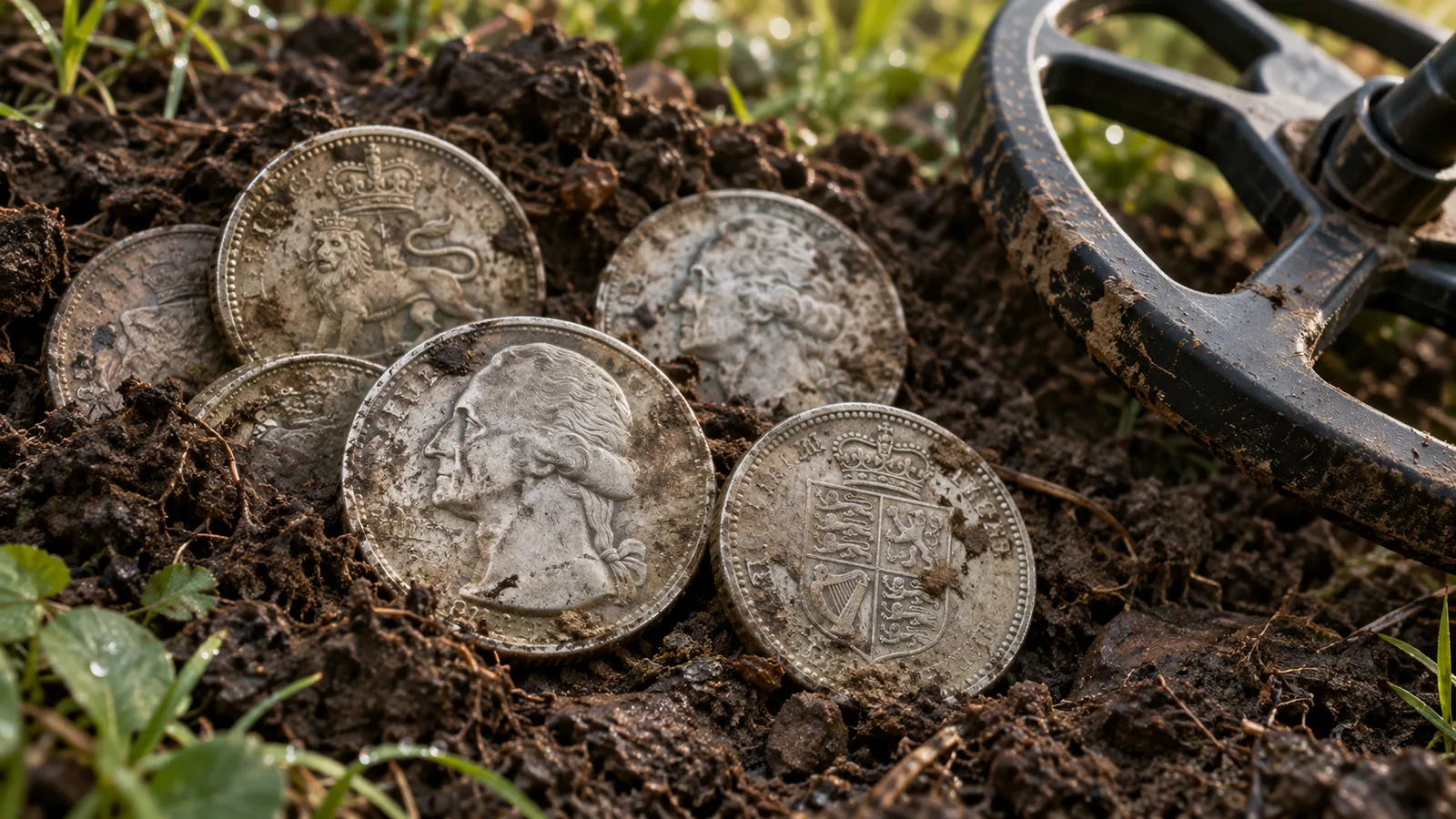
When I first started swinging a coil around abandoned farmhouses and community parks, hearing the phrase junk silver coins made me cringe. To my naive ears, calling an antique coin junk felt almost sacrilegious. That changed the autumn afternoon I dug a 1938 Mercury dime beneath the tangled roots of an old maple tree. It emerged from the damp black dirt as bright and clean as the morning it was lost, gleaming against the mud like a little beacon. When I showed it to an older collector at our local club meeting, he smiled and remarked that common dates like mine were the backbone of junk silver accumulations. In numismatics and metal detecting, the term refers not to garbage, but to common-date government-issued coins valued primarily for their bullion content rather than high collector scarcity.
For detectorists, these coins are absolute favorites to chase. They produce some of the most reliable audio signals on any modern machine, survive harsh underground environments far better than copper, and offer an immediate tangible link to past generations who carried real silver in their pockets every day.
Understanding Silver Content Across Different Eras
If you hunt in the United States, your benchmark for vintage silver is 1964. Prior to 1965, circulating US dimes, quarters, half dollars, and silver dollars were minted in an alloy containing ninety percent pure silver and ten percent copper. These 90 percent silver coins carry roughly 0.715 troy ounces of pure silver for every dollar of face value. When you pull a 1952 Washington quarter or a 1961 Roosevelt dime from the turf, its melt value alone dwarfs the nominal spending power stamped on its face.
Across the Atlantic, British coins followed a slightly different path. Before 1920, circulating British silver such as sixpences, shillings, florins, and half crowns were struck in traditional sterling silver, containing 92.5 percent pure metal. Facing economic pressure after the First World War, the Royal Mint reduced the alloy to 50 percent silver starting in 1920. This standard lasted until the end of 1946. Consequently, detectorists scouring UK pastures refer specifically to pre-1947 UK silver when describing coins that retain measurable precious metal value. Coins minted from 1947 onward switched entirely to cupronickel, which corrodes into ugly brownish-green crusts in acidic soils.
Canadian silver held eighty percent purity until mid-1967 before transitioning to nickel. Australian coins maintained sterling purity until 1945, shifting to fifty percent from 1946 through 1964. Knowing these date thresholds helps you immediately separate high-value silver from modern clad coinage right at the edge of the hole.
How Silver Behaves in Damp Soil
One of the greatest joys of recovering silver from the ground is its chemical stability. Unlike iron which blooms into flaky rust, or copper which often develops thick pitted verdigris, silver is a noble metal that resists oxidation. In neutral sandy loam or well-drained park grass, a silver coin can lie hidden six inches deep for eighty years and pop out looking as crisp as fresh laundry.
Soil chemistry does create exceptions. In damp farm ground treated with chemical fertilizers or pastures soaked in animal manure, silver reacts with sulfur compounds to form silver sulfide. This creates a dark grey crust often called horn silver. When I first encountered a horn-silver three-pence in a wet sheep pasture, I almost mistook it for lead scrap until a gentle thumb wipe revealed the faint profile of King George. Resist the urge to scrub these blackened pieces with abrasive wire brushes or scouring powders, as rough friction will permanently ruin the original coin details.
Detecting Signals and the Target Masking Challenge
On a digital metal detector, silver coins sit at the upper boundary of the conductivity scale. A silver dime typically rings up in the low-to-mid 80s on most modern VDI systems, while quarters and half dollars hit clear numbers in the upper 80s and low 90s. The audio tone is unmistakable: a clear, bell-like high pitch that repeats smoothly as you sweep across the target from north to south and east to west.
The real challenge in old gathering areas is target masking. People dropped silver where they gathered, and where people gathered, they dropped iron square nails, wire fragments, and bottle caps. Because silver produces an intense eddy current response, an experienced operator can often catch a fleeting high whisper even when a rusty nail is resting an inch above the coin. If you notice a high blip popping through an otherwise scratchy iron grunt, switch your sweep to an eighty-degree cross pattern. If the high note repeats consistently from even one angle, take the time to excavate the plug.
Practicing the Craft and Honing Your Ear
Learning to separate high-tone coin signals from deep iron falsing takes patience and repetition in the field. During cold winter months or rainy weeks when digging outdoors is out of the question, I like to keep my ears tuned using digital simulations. In the mobile simulator MetalHunter, you can sweep across varied environments like meadows and plowed fields, picking out distinctive high tones and watching how realistic coin weights register on your virtual display. It captures the rhythm of moving from one target to the next without leaving your living room.
When spring returns and ground thaws, that familiarity with clean audio tones translates directly into more efficient recoveries in real grass.
Legal Responsibilities and Proper Field Etiquette
Every detectorist must remember that digging silver carries legal responsibilities. In the United States, metal detecting on private property always requires express landowner permission. Searching on federal public lands is strictly regulated under the Archaeological Resources Protection Act (ARPA), which protects historic artifacts over one hundred years old. Never dig on national park grounds or registered historic landmarks.
If you search in the United Kingdom, familiarize yourself with the Portable Antiquities Scheme (PAS) and the Treasure Act. Hoards of two or more silver coins over three hundred years old must be reported to the local coroner within fourteen days. When searching on open beaches or tidal mudflats, check local council rules or harbor authority permits, such as the Port of London Authority requirements along the Thames foreshore. Wherever you detect, cut neat horseshoe plugs with a sharp hand trowel, replace the sod firmly, and haul every piece of scrap iron and aluminum trash home to the bin.
| Country / Region | Coinage Period | Silver Percentage | Typical Face Values |
|---|---|---|---|
| United States | 1892 to 1964 | 90% Silver, 10% Copper | Dimes, Quarters, Half Dollars |
| United Kingdom | Pre-1920 | 92.5% Sterling Silver | Sixpences, Shillings, Florins, Half Crowns |
| United Kingdom | 1920 to 1946 | 50% Silver | Sixpences, Shillings, Florins, Half Crowns |
| Canada | 1920 to 1967 | 80% Silver | Dimes, Quarters, Half Dollars |
| Australia | 1910 to 1945 | 92.5% Sterling Silver | Threepence, Sixpence, Shillings, Florins |
| Australia | 1946 to 1964 | 50% Silver | Threepence, Sixpence, Shillings, Florins |
FAQ
Why are these coins called junk silver if they are valuable?
The term comes from bullion dealers and collectors who categorize common-date, worn circulation coins with no numismatic premium strictly by their silver melt weight, rather than treating them as rare collector pieces.
Can a metal detector distinguish silver from aluminum screw caps?
Large silver coins like quarters and half dollars produce higher VDI numbers than most aluminum caps, but a thin silver dime can read very close to a squashed screw cap or zinc penny. Digging repeatable two-way signals in that range is the only sure way to avoid passing over good coins.
How should I clean a silver coin dug from the dirt?
Rinse it gently under lukewarm water to remove loose mud. Never use brass brushes, vinegar, or coarse baking soda pastes, as abrasive scrubbing creates fine scratches that destroy any remaining collector appeal.
What should I do if I dig up an unexploded military shell or grenade?
Do not touch or shake it under any circumstances. Step back carefully along your approach path, mark the general location from a safe distance, and call 911 or 999 immediately so qualified disposal teams can handle it.


