
MetalHunter: what you can find underfoot with a metal detector
A look at MetalHunter: eight locations, over a thousand finds, a coin collection, magnet fishing and a scrap metal yard.
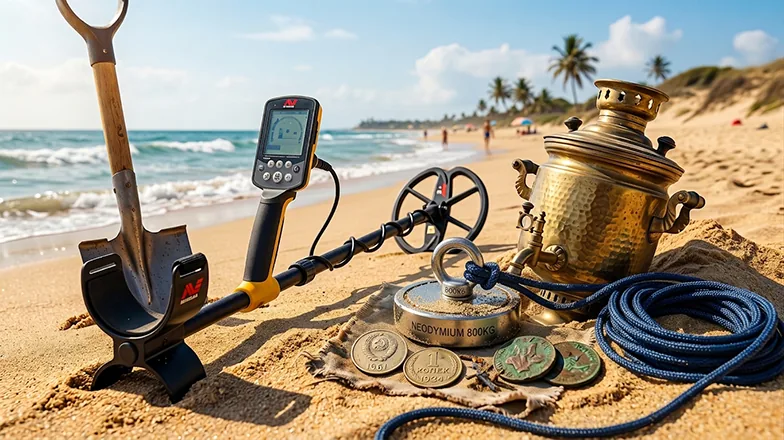
Treasure hunting is a surprisingly meditative hobby: you walk across a field, listen to the beeping of the detector, dig, clean up the find and wonder what it is — a beer cap or a kopeck from 1728. MetalHunter brings this pastime to your phone with almost no simplifications: VDI readings, stamina, limited carrying capacity and a scrap metal yard that takes everything that didn't make it onto your collection shelf.
The game is built with the real hobby in mind: tens of thousands of people go detecting every weekend, and magnet fishing — throwing a strong search magnet on a rope into a river or a pond — has grown into a hobby with its own communities. Here is what made it into the game, how the locations differ, and why it is great for short play sessions.
How the search works
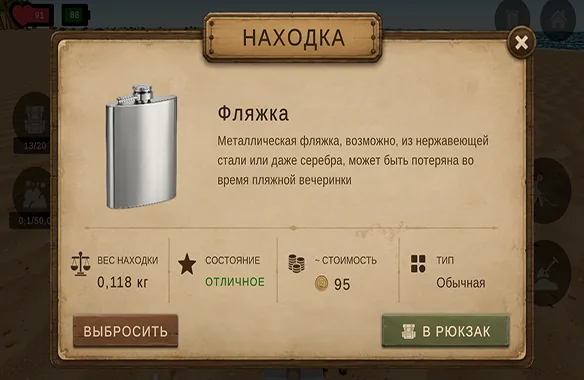
The game is played in first person. You walk around a location with a metal detector, and it reacts to metal with a sound and a VDI reading — the number experienced detectorists use to tell ferrous metal from non-ferrous. Low values usually mean iron, high ones mean copper, silver or gold. You don't have to dig everything: over time you learn to skip obvious junk.
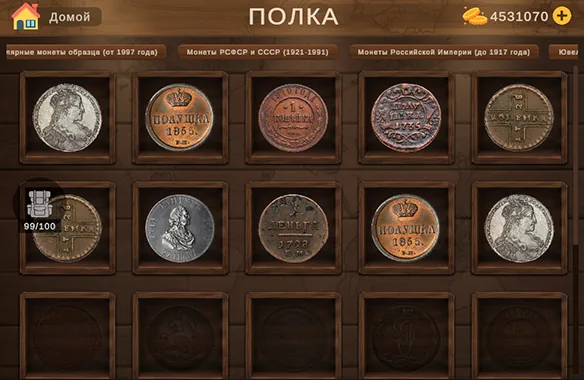
Then comes the shovel. Heavy items take longer to dig, deep signals need a better detector. Each find is shown up close with its name, weight and price, and you decide: to the shelf, to the buyer, or into the truck bed for scrap. Every find is also part of the collection, so even a cheap coin can complete a series.
Eight locations — from a meadow to Egypt
You start on a meadow: flat grass, simple signals and lots of modern coins. Then come a forest with military finds, a swamp with antiquities, a plowed field, a beach, mountains and a village with abandoned houses. The latest location is Egypt: desert, pyramids, a canal and date palms, with its own finds — amulets, bronze arrowheads, Ottoman-era coins and traces of the El Alamein campaign.
Locations differ in more than looks. Each has its own set of finds, its own junk and its own depth: on the beach most things lie near the surface, while in the mountains and in Egypt you have to dig deeper for rare items. New locations are bought with in-game currency earned by selling finds.
A collection of over a thousand finds
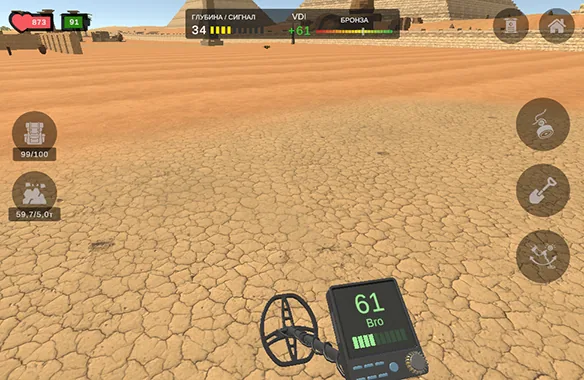
The in-game catalog lists more than a thousand items. Coins are grouped by era — the Russian Empire, the USSR, the 1990s and modern Russia, including commemorative coins. Coin weights match real catalogs: a 1765 five-kopeck coin weighs its 51 grams, and the "Sower" chervonets weighs 8.6 grams.
Besides coins there are military items, peasant household objects, jewelry, amulets and things simply lost on the beach — from a fitness band to a platinum ring. Everything goes onto shelf tabs, and rarity is visible at a glance, from common to legendary.
Scrap, vehicles and economy
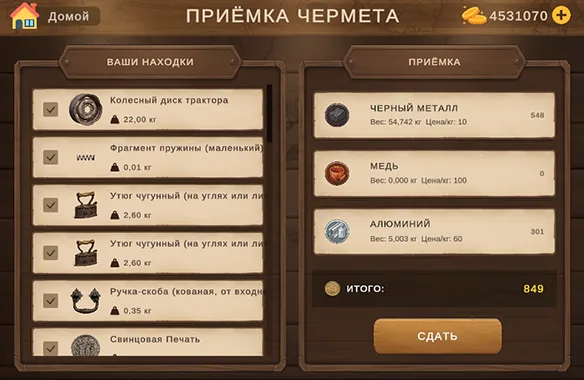
Not everything you find belongs on a shelf. Rusty radiators, tank tracks and broken plows go into the truck bed and are sold at the scrap yard by weight: iron is cheap, copper and aluminum are worth much more. Weights are realistic, so an eight-kilogram piece of a cast iron radiator takes half of your starting wheelbarrow.
Vehicles are a separate progression branch: a 15 kg wheelbarrow, a walk-behind tractor, a motorcycle, a station wagon, a pickup and multi-ton trucks. Your gear grows too: twelve metal detectors, shovels, backpacks, batteries and food, without which the hero gets tired fast.
Magnet fishing
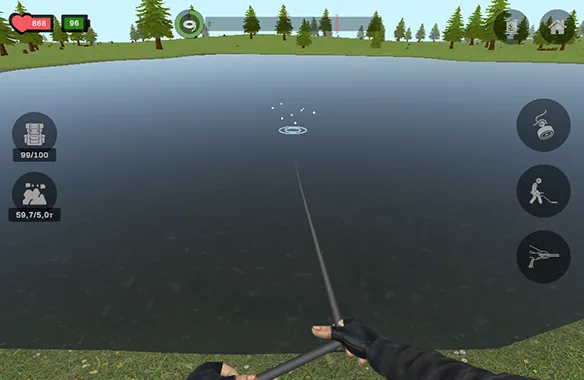
In ponds, canals and the sea you search with a magnet. Throw it on a rope, wait, pull it in by holding the button and watch the tension bar: a catch that is too heavy can snap the rope. Magnets from 60 to 200 millimeters and ropes from clothesline to Kevlar decide what you can actually pull out.
The catch is special: anchors, bollards, irrigation wheel gears, rail cut-offs — items weighing dozens of kilograms that a detector will never find. All of it is sold by weight too.
Quests, auction and the den
Besides free search there is a chain of quests: find a specific item, deliver a certain weight of metal, complete a coin series. Rare finds can be put up for auction, where prices are often higher than at the buyer. Between trips the hero rests in the den — a personal corner furnished with the things you have found.
There are leaderboards and achievements for those who like to compare their collection with others.
FAQ
Do I need to know anything about real treasure hunting?
No. The game explains VDI readings in tips, and the first locations forgive mistakes. Over time you will start recognizing signals by ear, just like real detectorists.
Is the game free?
Downloading and the main game are free. There are ads and optional purchases: premium vehicles, a shovel, a magnet and ad removal. All locations and gear can be unlocked with in-game currency.
How long is one session?
One trip takes five to fifteen minutes: walk around, dig a few signals, sell the metal. Progress is saved automatically.
What devices does it run on?
Android smartphones. A detail setting lowers draw distance and simplifies materials on weaker devices so the game runs smoothly.


