
Where to Go Magnet Fishing Safely
A promising-looking bridge is not automatically a good place to magnet fish. I now check access, water conditions and what is happening around the bank before I even untangle the rope.
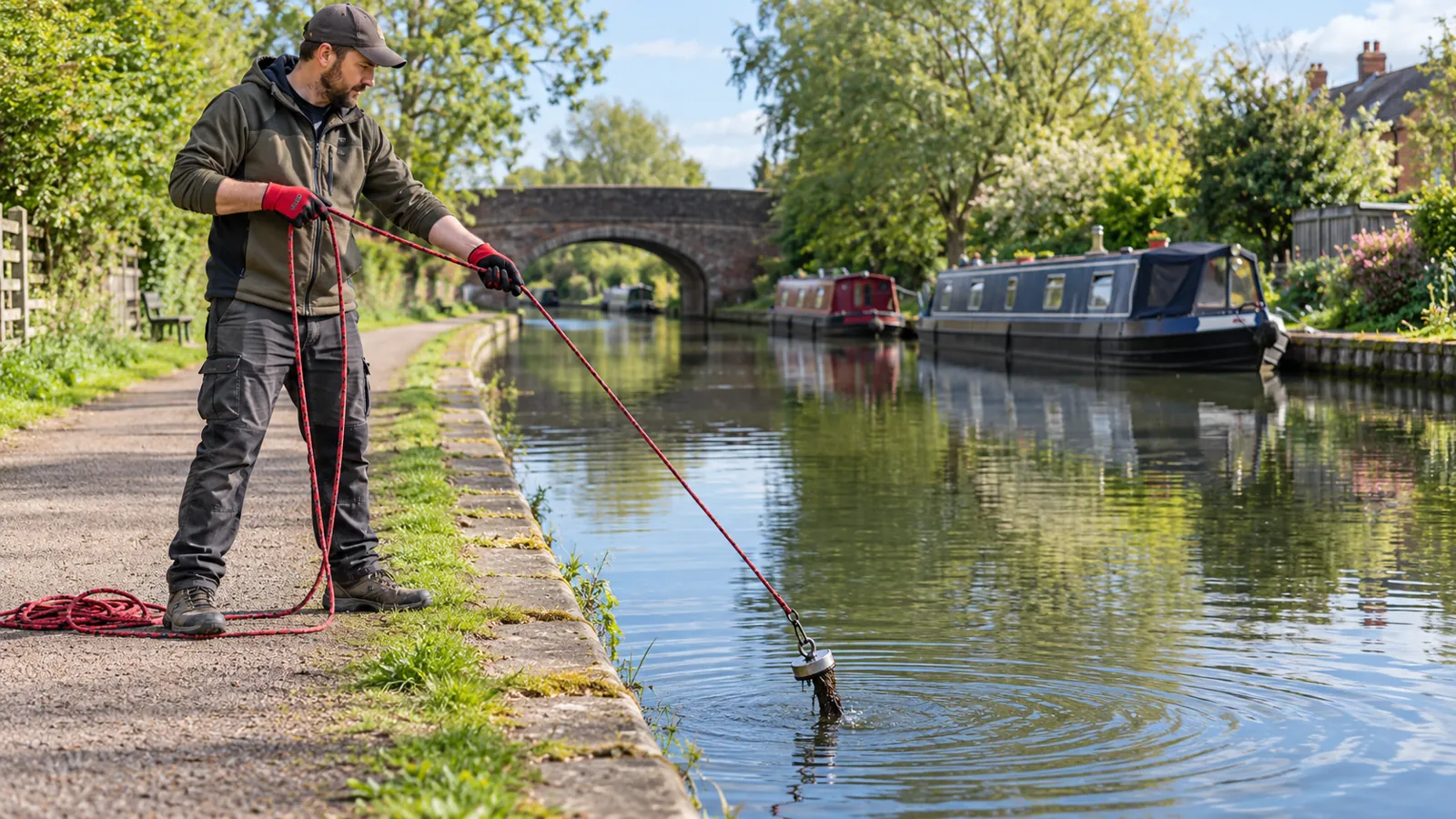
When I first looked for places to magnet fish, I searched for bridges and old canals. That was a start, but it skipped the more useful question: can I use this spot safely and legally? A dramatic-looking bridge can have fast water, restricted access or a narrow edge with no room to work. A plain public pond may be a much better place to learn.
Finding safe places for magnet fishing takes a little scouting. You want permission to be there, a stable place to stand, water conditions you can judge and enough space to keep the rope away from other people. The object of the hobby is to retrieve metal, not to discover how quickly a wet bank can become slippery.
Start with access and permission
Before deciding where to magnet fish, establish who manages the land and water. Public access does not always mean magnet fishing is allowed. A park, marina, canal path or fishing access point may have local restrictions. Private land requires permission from the owner or manager, even if the path looks welcoming.
Look for posted signs and check the rules for the site online or by contacting the responsible authority. A canal may be managed by a navigation authority; a pond may belong to a park service or private estate; a riverbank can cross several different ownerships. If you cannot confirm access, choose another spot. “I thought it was public” is not a particularly persuasive explanation after an argument with a ranger.
Rules also differ between countries, states and local areas. Some places restrict magnets, casting lines, removal of objects or activity around infrastructure. Historic sites and protected areas can have stricter rules. In the UK, reporting obligations can apply to certain finds under the Treasure Act and related requirements. In the United States, federal land rules and ARPA protections may affect archaeological resources. Check current local requirements before visiting.
What makes a good first location?
A good beginner site is usually easy to reach, has a wide and stable bank, and lets you work without crossing a road or blocking a path. Calm water and shallow edges make it easier to control the line. A railing can help keep you back from a drop, but it does not make every bridge suitable; people, traffic and navigation still need room.
Look for a clear patch where you can lay out rope without creating a trip hazard. Avoid spots beside busy cycle routes, narrow towpaths, boat launches or swimming areas. If someone approaches, pause and give them plenty of space. You may be focused on the line, but a cyclist passing behind you is not.
Choose a place where you can leave with any rubbish or safe-to-carry debris you retrieve. If the bank is steep or there is no sensible way to set down an object, do not use it as a first outing site. A magnet can collect heavier material than expected, and lifting something awkward at the water's edge is a poor time to improvise.
Canals, rivers and ponds each need different care
Magnet fishing canals and rivers can be appealing because old structures and regular use mean there may be metal below the surface. But moving water introduces hazards. Current can pull a line, levels can change, and a snagged magnet may be harder to retrieve. Stay well away from flood conditions, locks, weirs, sluices and other control structures unless the site authority explicitly provides a safe permitted area.
Canals may look still, but boats, towpaths, lock operations and steep walls all matter. Do not cast where a vessel could cross the line. Keep clear of mooring areas and follow navigation rules. A canal wall can leave no easy way to recover a fallen person, so stand back and use a location with a stable edge and a clear exit.
Rivers deserve extra caution because depth and current are hard to judge from the bank. Rain far upstream can change conditions even when the sky above you is clear. Do not enter the water to retrieve a magnet or object. If the line is trapped, work from a safe place or leave it behind.
Ponds and small lakes can offer calmer conditions, but they are not hazard-free. Mud can be deep, banks can collapse, and weeds may hide objects. Stay on firm ground, avoid fishing near swimmers and check whether the water is private or used for wildlife management.
Watch for hazards before the first cast
Take a few minutes to look at the water and surrounding area. Check for slippery algae, loose stones, broken glass, overhanging branches, exposed cables, steep edges and signs of recent flooding. Notice where the rope could snag and how you would get back to the path if you had to step away.
- Wear shoes with good grip and gloves suited to handling wet rope.
- Keep your phone accessible and tell someone where you are going if you are alone.
- Do not fish during storms, high water, poor visibility or strong winds.
- Keep the rope out of walkways and away from boats, animals and other visitors.
- Never wrap a rope around your hand, wrist or body.
- Do not lean over a bank or climb a barrier to reach a better angle.
For a first outing, going with a friend is sensible. We can help each other watch the surroundings, keep the line organized and decide when an object is too heavy to lift. Agree beforehand that either person can call a stop if conditions change. That is a useful rule, and it does not require a committee meeting.
Have a plan for unexpected finds
A magnet can bring up everyday scrap, but it can also bring up sharp objects, tools, weapons or ammunition. Rust and mud make identification uncertain. If something resembles ammunition or an explosive, do not clean it, open it or carry it away. Stop, keep people clear and contact local emergency services or the relevant authority.
For ordinary scrap, consider whether you can lift it and dispose of it safely. Do not leave sharp debris scattered where someone could step on it. Follow site guidance about removal and waste. If a find may be historically significant, record its location and check the applicable reporting rules rather than treating it as a souvenir.
It helps to bring a container for small items and a way to keep sharp debris separate. Do not put wet metal loose in a pocket or bag with your phone. A short review of the site rules and a few basic supplies can save a long, awkward walk to the car.
Scout the spot before carrying your gear
I like to visit a possible site once without the magnet. I can check the path, signs, banks and foot traffic without managing a coil of rope at the same time. Maps and official site pages help with access, but they cannot tell you whether a bank is muddy after rain or a towpath is crowded on a sunny afternoon.
Start with a short session in daylight and calm weather. Lower the magnet near the bank rather than making a long cast. If the location feels cramped, unstable or busy, pack up and move on. The best place to magnet fish is one where you can focus on the activity and leave without having to explain a preventable mishap.
For a virtual version of searching water and recovering metal, MetalHunter includes magnet fishing alongside metal detecting. It can be a fun option when real-world access or weather does not cooperate.
FAQ
Where can I magnet fish legally?
That depends on the country and the specific land or water manager. Check local rules, posted signs and access requirements, and get permission for private property before you go.
Are canals safe places for magnet fishing?
Some permitted canal locations may be suitable, but locks, steep walls, boat traffic and narrow towpaths create hazards. Follow the canal authority's rules and use a stable, open area away from navigation.
Can I magnet fish in a river?
Only where access and activity are allowed, and only when conditions are safe. Current and water levels can change quickly. Do not enter the river to retrieve a magnet or object.
What should I do if the magnet gets stuck?
Stay on firm ground, avoid wrapping the rope around yourself and try only gentle changes in angle. If it cannot be freed safely, leave it rather than risking a fall or injury.


